Seafarer's Reef
Thalassia testudinum - Turtle Grass
Thalassia testudinum - Turtle Grass
Couldn't load pickup availability
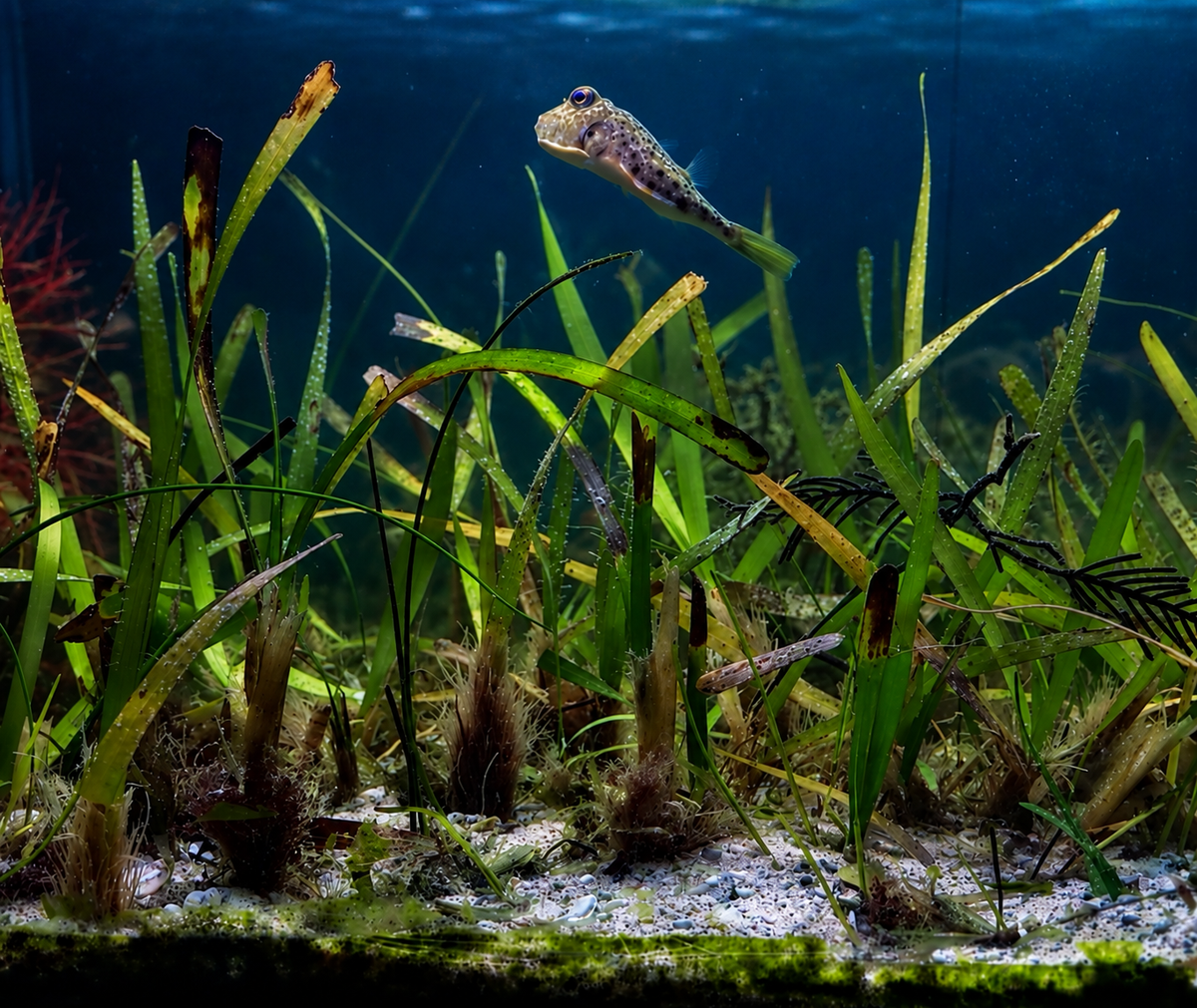
One of the most important habitat-forming plants of the tropical western Atlantic, Thalassia testudinum is a true marine flowering plant characterized by broad, flat blades emerging from a powerful network of underground rhizomes and roots. Mature stands develop into dense underwater meadows that resemble terrestrial grasslands, creating an entire ecosystem above and below the sediment.
Unlike macroalgae, turtle grass possesses true roots, vascular tissue, flowers, pollen, and seeds. Its extensive below-ground structure allows it to draw nutrients directly from the sediment while its leaves interact with the surrounding water column. Over time, interconnected rhizomes spread horizontally beneath the substrate, producing new shoots and gradually expanding the meadow.
Cultivation & Condition
Our turtle grass is fully aquacultured and grown within our own sunlit, outdoor marine systems. These plants develop under natural sunlight in mature, high-biodiversity ecosystems containing established microbial communities, microfauna, algae, invertebrates, and biologically active sediment.
- 100% aquacultured within our own systems
- Grown under full-spectrum natural sunlight
- Established in mature, biologically active substrate
- Maintained within stable, high-biodiversity marine ecosystems
- Selected for healthy blades, roots, rhizomes, and active growth
Growing turtle grass this way allows the plant to develop as part of an established ecosystem rather than simply being maintained until sale. Healthy specimens are selected from actively growing populations with functional below-ground structures already supporting continued growth.
Ecological Role
- Extensive rhizomes bind and stabilize marine sediments
- Provides habitat and grazing surfaces for countless small organisms
- Absorbs nutrients through both leaves and below-ground tissues
- Produces oxygen and fixes carbon through photosynthesis
- Creates complex nursery habitat as stands become established
A mature turtle grass meadow is far more complex than the visible blades suggest. The leaves support films of microorganisms and other epiphytic life, while the sediment beneath contains roots, rhizomes, microbes, and small invertebrates. Together, these layers create one of the defining shallow-water habitats of the Caribbean and Gulf region.
Notable Biological Trait
Turtle grass represents an extraordinary evolutionary transition. Its ancestors were terrestrial flowering plants that ultimately returned to the ocean and evolved the ability to complete their reproductive cycle while submerged. Thalassia testudinum can produce true underwater flowers, fruits, and seeds despite spending its entire adult life beneath seawater.
The plant also invests heavily below the substrate. A substantial portion of an established meadow exists out of sight as interconnected rhizomes and roots. This underground network stores resources, anchors the plant, stabilizes sediment, and allows established colonies to survive disturbances that damage individual leaves.
Aquarium Integration
- Requires a deep, stable substrate capable of supporting rhizome growth
- Performs best under intense lighting, including natural sunlight
- Benefits significantly from mature, biologically active sediment
- Requires adequate nutrients to support sustained vascular plant growth
- Should be given sufficient space for horizontal rhizome expansion
Few aquarium plants can replicate the ecological structure created by an established stand of Thalassia testudinum. Under the right conditions, individual shoots gradually connect into a living underwater meadow, bringing the structure and biological complexity of a natural seagrass ecosystem directly into the aquarium.
Share